Thursday, November 10, 2022

The Red Tsunami That Wasn't

I gave myself a day to let the results of the midterms sink in, and as of now, my takeaway is that I just don't understand the rending of garments and gnashing of teeth on the Republican side. The bottom line is that what had been predicted for months, the Republican takeover of the House, appears all but certain. In fact, I briefly saw Fox News at the end of Bret Baier's hour yesterday, and Fox announced that the Republican takeover had been "called" (whatever that means), but nobody as far as I can tell has repeated it, even at Fox.

Nevertheless, the House Republicans are setting up for leadership elections, while the House Democrats aren't. This was going to be the key event of the cycle: with a Republican majority, the House can stop Democrat legislative initiatives, while Republican-controlled committees will have subpoena authority to pursue investigations into issues like COVID and the Biden family finances. The possibility of Republican control of the Senate is still open, but under the circumstances, the only big difference if the Democrats retain Senate control will be the ability to push through one or more of Biden's Supreme Court nominations -- but with a slim majority and unpredictable Republican senators, it would still be a likely outcome even if Republicans do win control.

Thus the key legislative outcome is already decided in Republcans' favor, which had been predicted by everyone. As my wife put it, you can cross the finish line in a jalopy, or you can do it in a limo, but you've still crossed the finish line. So why the rending of garments and gnashing of teeth? The answer probably has to do with Trump. Trump himself wasn't on the ballot, and interestingly, his record of endorsements according to ballotpedia isn't that different from prior years. His record of successful general election endorsements was 59% in 2018, 67% in 2019, 78% in 2020, 67% in 2021, and 78% in 2022 -- so in fact, he did slightly better this year than in several prior years.

But I think Don Surber captures the real reason for the disappointment:

We can spend months in denial but the fact is, Americans do not want Donald John Trump to be their president.

He did not save the Republican Party. He spent it.

. . . Governors Kemp, Sununu and DeSantis showed how Tuesday would have gone for Republicans without Trump. Republicans needed to gain 5 House seats. DeSantis delivered 4.

Dr. Oz showed how it went with Trump. That's how poisonous he has become in purple America. We, his fans, see the good in him and the evil in his enemies. But the majority doesn't and never will. It is a sale that cannot be made. There will be no second term from The Donald.

Looking at those individual data points, I can't disagree, although I'm not sure if there were other Republican candidates in the Pennsylvania and New Hampshire primaries who would have defeated the Democrats in the absence of Trump endorsements.

I would say that backing off at a greater distance, the Republicans have had two breakthrough figures since the 1990s, Newt Gingrich and Donald Trump. Both were able to turn the conventional wisdom upside down. Gingrich showed Republicans could win congressional majorities, which they hadn't done consistently since the 1920s. Trump brought down one political dynasty, the Bushes, and forestalled the creation of another, the Clintons. But neither could establish a stable electoral record himself. Having engineered the 1994 Republican upset victory in both houses of Congress, he served as Speaker of the House for only four years, forced to resign as Speaker and then resign his seat after a series of scandals and the failed strategy of impeaching Bill Clinton. Wikipedia quotes the New York Times describing him as "an expert in how to seize power, but a novice in holding it".

The same might be said of Trump. I think his biggest defect was relying on untested and unqualified advisers, who were in a constant state of churning. I'm not sure if this was much different from Gingrich, of whom it was said his opinions on anything depended on the person who'd talked with him most recently. Trump's instincts were often good, his delivery and execution less so, but his overall flamboyance was, as Don Surber suggests, his undoing.

However, as far as 2024 goes, I thionk Trump will be a sacrificial figure. It's clear that Trump has been the focus of Biden's 2024 reelection strategy, insofar as he's had one, and he was the focus of Democrat efforts to forestall a significant 2022 congressional victory by Republicans. The problem is that if, as predicted, Biden engineers an indictment of Trump in coming months, it will only take Trump out of the running for 2024 while leaving an open path for DeSantis to capitalize on his own 2022 victory and unify the party for 2024.

That's where I think the Democrat focus on Trump while ignoring DeSantis and other potential strong Republican candidates has been a serious miscalculation.

Wednesday, November 9, 2022

Maybe The Richest, But Definitely Not The Smartest

I couldn't help but notice this morning's news:

Elon Musk is dipping into his electric car company to pay for his share of the $44 billion Twitter purchase, according to reports.

He sold another $3.95 billion of Tesla shares Nov. 4-8, the Associated Press reported from regulatory filings, following up the $7 billion he sold in August as he tried to exit the Twitter deal on allegations of fraudulent account figures. He's now sold more than $19 billion of Tesla shares since April, when he started the Twitter deal.

Forbes reported this was the first time Musk's personal wealth, which is tied up in Tesla, has dipped below $200 billion since May 24. It also happened Oct. 1, 2021. Tesla shares closed at a 52-week low Tuesday at $191.30.

As I've looked at the Twitter takeover, on one hand from a considerable distance but on the other from a career in tech, I can't escape the feeling he's making things up as he goes along, which doesn't bode well. He started out making the $44 billion bid in April following a strange dance over whether or not he'd join Twitter's board of directors.

Less than a month later, Musk announced he'd put the deal on hold following generally vague statements about the number of bots among the platform's users. In July, he announced he wouldn't go through with the deal, whereupon Twitter filed suit to compel him to do so.

In October, he announced he'd changed his mind and would go through with the original deal at the original price. Late that month, he and Twitter closed the deal, and Musk fired Twitter's top executives, taking over as interim CEO. Other than vague and inchoate announcements about reducing workforce and making the company profitable, he hasn't articulated anything resembling a business strategy. Most visibly, his intentions over the blue-check feature of the application aren't clear, while his firing of half the workforce within a week of his arrival seems to have been largely a public relations move that by the way threw thousands of lives into chaos.

In fact, observers who thought Musk's staff cuts would largely dismantle the hated "trust and safety council" discovered no such thing seemed likely to take place.

What strikes me is that the captains of industry in the robber baron generation like Rockefeller, Gould, Carnegie, Morgan, Ford, and Harriman worked from consistent and predictable business strategies. Indeed, some like Morgan and Ford may have played those strategies too consistently in their later years, but at least they were consistent. Musk is anything but, and in the case of Twitter, he seems to be playing for attention and publicity instead of maximizing his investments. How much money has he thrown away to white-shoe law firms in this whole erratic Twitter saga?

I can't escape the idea he's playing a part in a personal drama, caudillo financier out to fix tech and remake society, maybe even a little like the emperor Nero who sang and played the lyre for his private amusement. This won't turn out well. He got rich, he got laid, he spread his seed for the benefit of mankind, and it all went to his head.

But then, I suppose this is the overall state of our public life. We need to find public figures who are stable and smart.

Tuesday, November 8, 2022

That Didn't Take Long

As I noted the other day, the news late last week and over the weekend was that Elon was going to fire half of Twitter's work force. I was skeptical, if for no other reason than the managers he tasked with drawing up the lists of whom to fire had an incentive to sabotage the process by firing the people who actually made the company run, insofar as it did. But in any case, a project that big planned in the space of a week wasn't going to turn out well. As of yesterday,

Twitter has asked dozens of employees that were laid off after Elon Musk took office to return. This is just days after nearly half of the company’s workforce across countries were asked to go, as per multiple media reports.

According to sources cited by Bloomberg, a few of those who are being asked to return were “laid off by mistake” while others were let go before management realized that their work and experience may be necessary to build the new features the new boss Elon Musk envisions.

Once again, life imitates Dilbert. In 2018, Musk issued the following almong a list of rules for Tesla employees:

6. Follow logic, not rules

“In general, always pick common sense as your guide. If following a ‘company rule’ is obviously ridiculous in a particular situation, such that it would make for a great Dilbert cartoon, then the rule should change.”

Well, give the guy credit. He decided to lay off half of Twitter, but it turned into a great Dilbert cartoon, so he decided to hire some of them back. What could go wrong?

In general, my corporate experience is that companies just don't reverse terminations, leaving aside only furloughs due to seasonal or business conditions where employees are called back when business improves. That even includes voluntary resignations where someone leaves the company for a better job -- for someone to have quit x years ago but be rehired, especially into a higher-level job, is so unusual that it's a subject of quiet congratulation. From a corporate point of view, firing someone probably leaves them bitter enough that they'll return and make trouble anyhow.

This would apply to the Twits who got the adverse notices last Friday, for that matter. Even if it was a big mistake, what does it say about the company that it would make that kind of mistake? You spent the weekend cursing fate and updating your resume, and they just say never mind? Frankly, I'd want more than an e-mail saying sorry, please come back, and the company should know that, too. Every one of those people is now a potential troublemaker who at minimum can be expected to be out the door at the first opportunity.

And it goes both ways -- advice from career consultants and headhunters is that if you submit your resignation letter and the company asks you to reconsider, it's a good idea not to do it. After all, why did you go to all the effort of updating your resume, sneaking out for interviews, and lining up your references? There had to be a good reason for leaving, and you can be sure that won't change. The corporate hierarchy, meanwhile, will be smarting over having been beaten and forced to rehire someone who wasn't happy.

I can think of one exception, though, which probably proves the rule: I was caught in a big downsizing and laid off with several others in my work unit. Half a dozen years later, I came back briefly as a consultant, working again with the remainder of the people in the unit who'd stayed. (This was probably a sign that they'd laid off the wrong people, come to think of it.) However, on returning, I discovered that they'd actually brought back one of the others who'd initally been laid off.

I was a bit surprised, since that worker was absolutely the most clueless and unproductive of the bunch, and the person simply resumed that role when she was rehired. I can't understand why this was done; the only explanation I can think of is that this was part of some obscure upside-down function of the Dilbert universe. In my case, once someone realized I was a former employee, they called the company who'd brought me in as a consultant and ordered me off the property.

Which takes me back to Elon's own advice, if it looks like a great Dilbert cartoon, maybe it's not such a good idea. Except I assume Elon figured it would make him look really smart if he ordered his people not to look like characters in a Dilbert cartoon. Maybe dating Amber Heard affected his IQ or something, who knows?

Monday, November 7, 2022

Neo-Malthusians, Longtermists, And Elon Musk

The German theoretical physicist and YouTuber Sabine Hossenfelder has a blog as well, where she often posts text versions of her YouTube presentations. I follow several physics YouTubers, in part because I have a suspicion that there are theoretical physics classes in Purgatory. However, Dr Hossenfelder also posts opinions on general topics, sometimes quirky ones. In a recent post, she talks about a school of thought she calls "longtermism", which it seems to me is in opposition to the current neo-Malthusian strain among globalists. In doing so, she gives an insight into Elon Musk's thinking, although I can't completely disagree with anyone who asks, "Why would you want to have that?"

Have you ever put away a bag of chips because they say it isn’t healthy? That makes sense. Have you ever put away a bag of chips because you want to increase your chances of having more children so we can populate the entire galaxy in a billion years? That makes. . . That makes you a longtermist. Longtermism is a currently popular philosophy among rich people like Elon Musk, Peter Thiel, and Jaan Tallinn. What do they believe and how crazy is it? That’s what we’ll talk about today.

. . . Longtermism has its roots in the effective altruism movement, whose followers try to be smart about donating money so that it has the biggest impact, for example by telling everyone how smart they are about donating money. Longtermists are concerned with how our future will look like in some billion years or longer. Their goal is to make sure that we don’t go extinct. So stop being selfish, put away that junk food and make babies.

Well, this explains one thing, possibly including the alleged frozen embryos he made with Amber Heard:

Elon Musk joked about his big family in a Friday interview with the Financial Times, saying that he is “pretty sure there are no other babies looming.”

The 51-year-old, however, called himself an “autumn chicken,” clarifying that he isn’t opposed to welcoming more children down the line.

The Tesla CEO became a dad in 2002 when his son Nevada arrived, but the infant died at 10 weeks old.

Two years later, he and then-wife Justine Wilson welcomed twins Griffin and Vivian, now 18.

He and Wilson, 50, are also the parents of 16-year-old triplets Kai, Saxon and Damian, born in 2006.

. . . After the former couple’s 2008 divorce, the SpaceX founder went on to welcome son X AE A-XII, now 2, and daughter Exa, now 10 months, with his on-again, off-again girlfriend Grimes in May 2020 and December 2021, respectively.

In July, news broke that Musk is the father of Neuralink executive Shivon Zilis‘ twins. The little ones were born in November of the previous year.

. . . Musk gave more insight into his expanding family via Twitter.

“Doing my best to help the underpopulation crisis,” he wrote. “A collapsing birth rate is the biggest danger civilization faces by far.”

It actually isn't entirely clear if he's the father of Amber Heard's daughter:

The Zombieland actress later welcomed daughter Oonagh Paige, 1, via surrogate in April 2021. She's never revealed the name of the baby's father. She also has not specified if she knew the donor personally or if he is presently involved in their daughter's life.

Nor is it known precisely how many of Musk's acknowledged children were also delivered via surrogates. This level of imputed altruism reminds me of claims during the Monica Lewinsky scandal that someone as highly evolved as Bill Clinton had a biological duty to spread his superior DNA to as many women as possible. (I mean, could you ask for a better illustration than his daugher, Chelsea?) This also brings back associations with one of the creepiest sci-fi flicks of all time, The Frozen Dead:

For 20 years, unrepentant Nazi scientist Dr. Norberg (Dana Andrews) has been experimentally thawing frozen Nazi soldiers who have been kept in suspended animation at his English country estate since the end of World War II. He is awaiting his superiors, General Lubeck (Karel Stepanek) and Captain Tirptiz (Basil Henson), who have been told by Norberg's assistant, Karl (Alan Tilvern) that Norberg's experiments have been a complete success. Unfortunately, they have not been. Norberg can thaw the body, but not the brain. All that he can produce are zombie-like beings who can do no more than endlessly repeat the memory of just one action from their past. The worst of them, Prisoner no. 3 (Edward Fox), is extremely violent, and is Norberg's brother.

This is yet another source that fed the brilliant TV series Fringe. What will become of all Musk's frozen embryos?

The intriguing question here is one Dr Hossenfelder doesn't mention, the contrast with the other, currently more popular population theory, which I've called neo-Malthusianism. The original version of Malthusianism failed when its premise, that population would grow faster than the world food supply, was refuted empirically. By the late 20th century, it was clear that world population could grow exponentially yet not run out of food. The neo-Malthusian reaction has been simply to substitute another set of variables in the same equation: growing population will produce greenhouse gases and overheat the planet, or fertilizer will pollute the water supply with nitrates, or reliance on meat will generate methane from herds of cattle, resulting in renewed prospects of Malthusian extinction.

The cure, though never made completely clear, must be not just green energy or eating insects, but also extreme population reduction combined with extreme reduction of world living standards. A speker at the World Economic Forum, someone named Sadhguru, let the cat out of the bag:

WEF’s Young Global Leaders, like Sadhguru, have long openly advocated for depopulation and are galvanizing public support for reducing the world’s population.

. . . “It’s good to hold back your reproduction otherwise nobody is going to live well on this planet. It doesn’t matter what technology you bring, it doesn’t matter what you do, nobody is going to live well on this planet if you continue to increase. When I say continue to increase I want you to understand the volume of increase that we have caused.”

. . . Like Sadhguru and WEF Agenda Contributor Bill Gates, WEF advisor Yuval Noah Harari admittedly wants to rid the planet of billions of people or “useless eaters.”

“We just don’t need the vast majority of the population,” Harari argued in a recent interview with Chris Anderson, the head of TED .“The future is about developing more and more sophisticated technology, like artificial intelligence [and] bioengineering, Most people don’t contribute anything to that, except perhaps for their data, and whatever people are still doing which is useful, these technologies increasingly will make redundant and will make it possible to replace the people.”

As Sadhguru puts it,

“Because you can’t expand the planet you have to decrease the population. There is no other way. Either you do it, or nature will do it. When nature does it, it’s not going to be nice, it’s not going to be nice at all.”

He doesn't propose a specific nice way ro reduce the population by billions, though. At least, he doesn't propose a nicer way than leaving it to nature, however he imagines that.

Elon Musk is at least slightly less crazy.

Sunday, November 6, 2022

Hey Twits, Welcome To Tech!

There's been quite a bit of comment over Elon Musk laying off what's been estimated as half of Twitter's workforce. A typical version, from a Twitter internal e-mail, goes like this:

"By 9 am PST on Friday, November 4, everyone will receive an individual e-mail with the subject line: Your Role at Twitter. (...) If your employment is not impacted, you will receive a notification via your Twitter e-mail. If your employment is impacted, you will receive a notification with next steps via your personal e-mail." The 7,000 or so employees of the social media platform bought by Elon Musk received this e-mail on Thursday, November 3, just a few hours before the company launched a vast layoff process. The method illustrates the expeditious, even brutal style of the unstoppable entrepreneur and boss of Tesla and SpaceX, who acquired the company a week earlier.

Offhand, I've never tried to tally up the number of times I was laid off, or in some cases fired, over my tech career, at least half a dozen, and that's not counting the times I got a new job before it could happen when I saw the handwriting on the wall. The Twitter e-mail is more or less standard practice, although another version, which I've also been through, is to have a pair of managers summon each employee into a little room where another pair tells them, "There won't be a place for you at the dynamic new WampusCorp," at which time security escorts the deselectee out the door. They're given a time after hours when they can return to retrieve their personal effects.

Actually, I always had a good idea when this was going to happen, and in the days prior I'd already removed my stuff. As far as I was concerned, cleaning out my desk was their job, not mine. The takeaway here is that this sort of thing is routine, and beyond that, as the Dilbert strip recognizes, the bosses don't actually know who's doing a good job, but if they have an inkling, they fear and distrust those people and get rid of them whenever they can.

So what intrigues me most is that the Twits feel so disappointed.

Twitter employees "began posting on the platform Thursday night and Friday morning that they had already been locked out of their company email accounts ahead of the planned layoff notification," CNN reported on Friday.

Musk "purged roughly half of Twitter's 7,500 employee base, leaving whole teams totally or near completely gutted," the Verge similarly reported on Friday.

Employee messages on social media expressed regret and wistfulness at the news of having been dismissed.

, , , A class-action lawsuit has been filed against Musk and Twitter, meanwhile, with a suit in California court claiming that Twitter did not give its fired employees sufficient notice before their termination.

So maybe two years from now, they're each gonna get a check for a few hundred bucks? My experience of tech has been that every IT department and every tech vendor is massively overstaffed, and the most effective skill people have is the ability not to be around when work gets handed out. In Silicon Valley, these people are also wildly overpaid, and as well they get free popcorn and free beer on Fridays with a no-questions-asked ride home from security if they overindulge. How smart can these people be if they think this will last forever?

The other question is how smart can Elon Musk be if he got himself into this mess? I read that prior to Friday's layoffs, Twitter managers had been told to draw up lists of employees to cut, and if they didn't, they'd be fired themselves. But I'd already decided that if Musk dated Amber Heard, much less if he froze embryos with her as alleged, he can't be that bright -- even the pointy-haired boss in the Dilbert strip knows they don't know who their good workers are, but if they did, they'd lay those off specifically as a passive-aggressive strategy to show Musk the disaster he's brought on himself.

So fire everyone and start over as a business approach works no better than any other. I see reports that Musk has sent teams from Tesla and SpaceX to oversee the transition, but this assumes these organizations are more effective than the people who were laid off at Twitter -- a big assumption. They'll certainly tell you they are, and once they're installed, they'll certainly give their old colleagues preferential treatment, but I doubt if that will improve anything.

Actually, I spent part of my career at a tech company that was well known at the time, a competitor to IBM, that bought up underperforming tech companies under the assumption that they'd make them profitable -- not all that different from Elon's strategy when you think about it. The problem was that it was a Ponzi scheme not that far from Enron, and its CEO spent 12 years in prison for securities fraud.

They took layoffs to a new level. As I noted, their strategy was to acquire other tech companies, but given the nature of tech, people who leave one company inevitably get jobs in another tech company. This company's technique was, once they took over a new company, the HR department would search the newly acquired company's personnel records to locate people who'd once worked for them. Then there'd be a day when not only the inessential people would be laid off (i.e. called into the little room and told there was no longer a place for them), but former employees who'd moved on and gotten a job at the new company would be fired as well.

In hindsight, that was to eliminate anyone who potentially knew too much. But hey, that's tech. I survived, for whatever that's worth.

Saturday, November 5, 2022

The Pelosi Attack, Election Denial, COVID Skepticism, Gaslighting, And The Midterms

Yesterday I pointed out that even if we rely on consensus mainstream reporting on the Paul Pelosi attack, supplemented by court documents, there continue to be puzzling questions about precisely what happened at the front door of the Pelosi home after police arrived and why security there was so lax that a disorganized psychotic could enter the home without tripping an alarm, as well as how the Capitol Police could have missed the incident on their live camera feed.

This comes after nearly everyone discarded theories that David DePape was Paul's gay lover or was in the home for other questionable purposes -- although it must be acknowledged that SFPD Chief Scott's initial statements were so poorly written that they left room for misinterpretation until other sources like court filings became available. The problem is that the media consensus stubbornly continues a lack of transparency over even the current revised version of the story.

NBC News pulled a report Friday that claimed House Speaker Nancy Pelosi’s husband didn’t let on that he was in any danger when cops showed up at his home just prior to the hammer attack on him.

The now-deleted clip said Paul Pelosi, 82, answered the door for cops who responded to a 911 call at the San Francisco home, but the officers were “seemingly unaware they had been called to the home of the speaker of the House.”

Pelosi didn’t “declare an emergency” or try to leave, but instead walked several feet back into the foyer toward armed attacker David DePape, who had broken into the home last Friday and was carrying a hammer, sources told NBC.

The report, which cited sources familiar with the matter, said it wasn’t clear what Pelosi’s mental state was or if he had already been hurt.

The NBC report from Friday was taken down with the explanation, “The piece should not have aired because it did not meet NBC News reporting standards.”

Nevertheless, experienced police officers, lawyers, and laypeople like me who are informed on police issues have unresolved questions about the incident. Why didn't Pelosi simply push past the door toward the officers when he opened it? Instead, accounts suggest that after he opened it, he returned to struggle with DePape over the hammer.

Why did the police apparently hesitate at the entryway long enough to allow this to happen? They had full legal authority to enter as soon as they recognized something was wrong, but they waited until DePape struck Pelosi in the head with the hammer. This leaves aside the question of why the Capitol Police didn't monitor the live feed or why the security system, with Pelosi alone in the house, was apparently not armed at 2:30 AM. What was Pelosi's mental state? Who knows? Is this something the family would prefer not be published? Are there nevertheless issues that need to be made public here?

According to the Washington Post, though,

On Tuesday evening, The Washington Post reported that the Capitol Police had a live feed of the Pelosi couple’s San Francisco house during the attack but that no one was monitoring the feed. In short order, a new demand emerged: Release that video! Release the video of the responding police officers! What are you hiding?! Because this is how the conspiracy theory continues to ooze forward. There’s always some information out there being suspiciously hidden that will prove the conspiracy theory correct. If that information is suppressed, it reinforces the conspiracy theory. If it is released, it becomes evidence that contributes to the conspiracy theory — colored yarn is pinned to it — or attention just turns to some other just-out-of-sight information.

. . . the public understanding of how logic works is too weak. One of the common responses to Trump’s false claims about election fraud was that it was up to the media to prove rampant fraud didn’t happen, which is nothing more than shifting an impossible burden away from the conspiracy theory.

As the 1960s song put it,

What will you do if we let you go home
And the plastic's all melted
And so is the chrome?
. . . What will you do when the label comes off
And the plastic's all melted
And the chrome is too soft?

Notice how the elite reason for withholding information on the Pelosi attack, however innocuous its release might be, elides into election denial and Trumpism. The public has proven they can't handle logic, so they must trust the accounts they're given lest they fall victim to conspiracy theories. This applies, of course, to COVID skepticism as well, which is the one issue over which media has been most assiduously suppressing "misinformation". Despite this level of censorship, Alex Berenson, one of the best-known COVID skeptics, has persisted in publishing his contrarian research. For instance, he discusses the research of Milwaukee County Medical Examiner Dr. Brian L. Peterson into the actual cause of deaths attributed to COVID on death certificates (paywall):

As far as Peterson knows, only one other county medical examiner in the United States performed a similar review. It is possible that Peterson has looked at medical records for more individual Covid-related deaths than anyone else.

Roughly 20 percent of deaths that physicians certified as Covid-related were not. Some would have been obvious to a layperson - the classic example being a homicide victim who happened to have a positive Covid test.

. . . Another 20 percent of deaths came in people with very late-stage cancer or other terminal conditions who did have Covid and symptoms specific to it when they died. Those people would likely have died in days or weeks even if they had not been infected, Peterson said. Still, he added Sars-Cov-2 to their death certificates as a secondary cause, since the virus had hastened their deaths.

In other words, about 40 percent of all the deaths attributed to Covid had either a marginal link to it or none at all.

. . . In [the remaining 60 percent of] cases, Peterson agreed that the coronavirus was the primary cause of death and reported it that way on their death certificates.

Stil, the people who died of Covid were almost always very unhealthy, he said.

“Even those folks had comorbidities that were substantial.”

Even in the current environment, views like these must clearly be published with great circumspection lest everyone involved be canceled for spreading "misinformation". Note that Emily Oster's call for a COVID amnesty in the Atlantic specifically excludes those who spread such "misinformation" -- notwithstanding her tacit acknowledgement that culpable errors were made that must be forgiven, forgiveness must nevertheless preserve the comfortable narrative and gloss over questions like how the virus originated or how the destructive policies were decided.

This brings us to the current election cycle. The narrative, as we see in the Washington Post op-ed at the link or President Biden's increasingly shrill warnings about Donald Trump and election denial, involves a US population that's unwilling to accept packaged versions of events and is thus vulnerable to "conspiracy theories" and "misinformation".

I've already said that COVID is the big, but largely unspoken, subtext of the campaign leading up to Tuesday's elections, and it's because a substantial part of the US population recognizes it was bamboozled. Indeed, the COVID crisis, which is looking more and more as though it was largely manufactured, preceded and heavily influenced the 2020 election. Even if it can't be proven that it was stolen via quantifiable election fraud, there's an inescapable sense that the issue swung the election in some uncomfortable way.

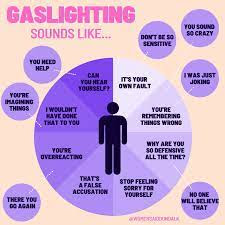
Thus the continuing need for the elites to condemn this mindset as "conspiracy theories", which is really just an acknowledgement that the electorate is deeply suspicious of all packaged narratives at this stage. The elites wanted to spin the Pelosi attack as a revolt of the deplorables, but it's turning out that attack couldn't have come at a less opportune time for them, raising continuing questions about current leaders and the people surrounding them. People can figure it out when they're being gaslighted.

Friday, November 4, 2022

There Are Still Questions About The Pelosi Attack

As I noted earlier this week, many of the original questions about David DePape's assault on Paul Pelosi arose from the poorly written account SFPD Chief Scott originally gave of the event, made worse by at least two subsequent "clarifications" that raised more questions than they answered. For now, it seems as though we have a version of the attack that's more or less reliable in its general outlines: David DePape, a disorganized psychotic, was able to bypass the home's security, break in via a rear door, surprise Pelosi while he was sleeping, and engage in an incoherent exchange that gave Pelosi the opportunity to pick up a phone and call 911. The 911 operator, sensing something was wrong as Pelosi sought to communicate in code, caused the police dispatcher to declare an emergency, at which point the police quickly arrived.

This set of events took place within the span of a few minutes. There seems to be no reason to doubt that DePape and Pelosi did not know each other prior to the attack. However, DePape's disorganized mental state also indicates that he could not have made or executed any sort of sophisticated plan for the attack, and he succeeded only due to the ineffectiveness of the security measures surrounding the Speaker's family. That continues to be the biggest question arising from the event.

There's a second question, or set of questions, though, that's also emerged from the now established version. On Tuesday, I quoted from the FBI criminal complaint that more or less answers how the tableau that greeted the police at the open door to the home came about:

DEPAPE stated that they went downstairs to the front door. The police arrived and knocked on the door, and Pelosi ran over and opened it. Pelosi grabbed onto DEPAPE’s hammer, which was in DEPAPE’s hand.

. . . DEPAPE stated that he pulled the hammer away from Pelosi and swung the hammer towards Pelosi.

My question at the time was why, in fear of at least his safety if not his life, Pelosi didn't take advantage of having his hand on the door to hang on to it as it opened and swing around outside to be with the police -- whom I assume had announced themsevles as they knocked, as they do on OP Live. Instead, as best we can tell from the current version, he apparently noticed that DePape had a hammer, which hasn't appeared in the account prior to the police arriving, and began to struggle for it with DePape. DePape, 40 years younger than Pelosi, grabbed the hammer away and proceeded to strike Pelosi in the head with it.

Meanwhile, the police, who had arrived because the dispatcher declared an emergency, stood at the open door and didn't enter the house until DePape struck Pelosi with the hammer, at which point they tackled DePape and arrested him. This also doesn't make sense. The general rule of thumb, which is often explained on OP Live and similar shows, is that police can't enter a home without either permission or a warrant, with a few exceptions. One of the big ones is if there are "exigent circumstances", which in California can include a residential burglary in progress or the risk of danger to law enforcement officers or to others inside the property. The FBI criminal complaint says this about the scene:

At 2:31 a.m., San Francisco Police Department (“SFPD”) Officer Colby Wilmes responded to the Pelosi residence, California and knocked on the front door. When the door was opened, Pelosi and DEPAPE were both holding a hammer with one hand and DEPAPE had his other hand holding onto Pelosi’s forearm. Pelosi greeted the officers. The officers asked them what was going on. DEPAPE responded that everything was good. Officers then asked Pelosi and DEPAPE to drop the hammer.

DEPAPE pulled the hammer from Pelosi’s hand and swung the hammer, striking Pelosi in the head. Officers immediately went inside and were able to restrain DEPAPE.

As far as I can see, the officers had full legal authority, given the reported emergency and DePape's unexplained presence (not to mention the visible struggle over the hammer), to enter the home well before DePape swung the hammer, although every account of the seconds surrounding Pelosi's opening of the door is confusing. I think it's in the interest of clarity and transparency to release body cam footage of the incident, as well as security footage from the home entryway, which we now know exists if only because the Capitol Police ignored it as it happened on their live feed.

This leaves aside the whole open question that I raised at the top of this post, why a delusional psychotic was able to bypass existing security. It appears that conventional electronic door security that would have alerted Pelosi and the police to DePape's break-in hadn't been armed, although Pelosi was alone in the house at 2:30 AM -- and a Capitol Police officer tasked with monitoring the live feed had also neglected his duty. This will in fact need investigating.