Friday, May 5, 2023

"This Was One Single Can"

It looks like after more than a month of the ongoing Dylan Mulvaney-Bud Light debacle, Anheuser and its parent have settled on a communications strategy: their market is overreacting. Per the Daily Wire:

Anheuser-Busch is trying to convince wholesalers that the Dylan Mulvaney controversy that has caused sales of Bud Light to plummet has been overblown.

The brewery sent a letter to wholesalers about the backlash to the trans-identifying influencer posting a TikTok video with a can of Bud Light that had Mulvaney’s face on it. In the video, Mulvaney celebrated 365 days of “being a woman.”

“This was one single can given to one social media influencer,” the letter declares. “It was not made for production or sale to the general public. This can is not a formal campaign or advertisement.”

It looks like the global conglomerate that owns Anheuser Busch has signed on to this version aS well. Per CNN:

Anheuser-Busch InBev CEO Michel Doukeris addressed the Bud Light controversy in the company’s earnings call Thursday, saying it’s “too early to have a full view” of the impact of sponsoring an Instagram post by transgender influencer Dylan Mulvaney.

“The Bud Light volume decline in the US over the first three weeks of April, as publicly reported, would represent around 1% of our overall global volumes for that period,” Doukeris said on the call. He focused attention on the company’s global reach, saying that Bud Light is just one beer within its portfolio and it’s not changing the company’s full-year outlook.

. . . He also reiterated that the Mulvaney post wasn’t an ad campaign, and blasted the “misinformation” surrounding the sponsored post. Last week, A-B met with distributors to help them “dispel potential retailer misconception” about the Mulvaney ad.

A single can with Mulvaney’s face was given to her and was not for sale to the general public and not part of a broad campaign.

It's worth noting that figuratively speaking, CNN in its commentary is standing at M Doukeris's shoulder and nodding its head, a little like Dr Birx diligently endorsing Dr Fauci's every word back in the day. The American public is being misled by social media misinformation. Bud Light never had a campaign, it was just one can and one influencer who took things a little too far. Since then, we've made some adjustments. That's all! They're making such a big deal of this!

Several things strike at this stage. First, I agree with the Romanian YouTuber who says the Bud Light case will be a subject of classes in marketing schools for decades to come. Second, I agree with commentators who say this isn't about beer. It's certainly about the whole trans moral panic, but it's also become an example of corporate gaslighting.

The whole "one single can" routine mimics the stereotypical domestic dispute, "All I did was send her one single text. You're making such a big deal of this!"

The problem is that someone at Bud Light thought it would be a good idea to put Dylan Mulvaney's face on a Bud Light can, which is corporate property, in pursuit of a corporate policy, and send it to Mulvaney pursuant to a corporate agreement whereby he would endorse Bud Light. Per The UK Daily Mail,

The specifics of how the can fiasco erupted remain under wraps. The latest letter claims the Mulvaney can was the brainchild of an outside agency.

It is the first time the brewing giant has addressed the backlash in detail, after they were hit with a major dip in Bud Light sales following the paid partnership.

. . . Despite the company's attempts to disavow the connection, the video Mulvaney, 26, posted of herself drinking Bud Light at the start of April 2023 used the hashtag #budlightpartner.

It implies that she was paid for the partnership, despite the brewing giants now claiming that the beer can and social media posts were not meant to be 'for production or sale to the general public.'

So for now, Anheuser's position with the public at large is basically, "We never said that, and it didn't happen that way." We'll have to see how long that lasts -- it took them over a month to come up with it. Their problem is that they started by buying trouble, taking a visible corporate line on an issue they didn't need to address, when they were marketing a commodity for which consumers could easily change their preference. You don't want Bud Light? Great, you can drink Coors Light instead.

It was a "boycott" that demanded no sacrifice. The traditional idea of a boycott, like the Montgomery, AL bus boycott of 1955-56, involves some type of sacrifice, however minimal -- the African-Americans who refused to ride the Montgomery buses had to walk instead. The American colonials who boycotted English tea had to do without. But boycotting Bud Light simply means drinking another brand of beer, not having to forego anything.

Worse, as Saul Alinsky said, "Pick the target, freeze it, personalize it, polarize it. Don't try to attack abstract corporations or bureaucracies. Identify a responsible individual. Ignore attempts to shift or spread the blame."
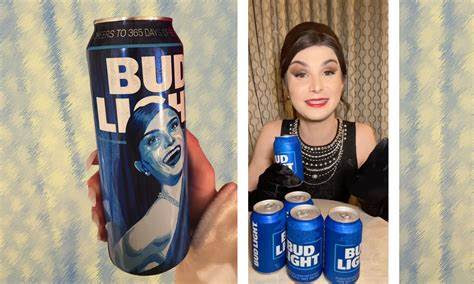
Anheuser set itself up for this, it's been going on for more than a month, the boycott is the easiest thing in the world to sustain, and the public is having great fun doing it. So far, Anheuser's response has been to try to gaslight the whole country. I'm not sure if this is something Anheuser can survive, but the issue isn't just beer.

Thursday, May 4, 2023

More On Fox's Tucker Crisis

I never watched Tucker Carlson, I never fell for the fresh-faced preppie schtick, and the mod hairpiece always gave me a sense the guy was phony. I also have little sympathy for Fox, except to note they're in the entertainment business, and I sort of expect them to be competent at running that business, which at this point they don't seem to be.

The most recent reports say Fox's overall ratings are down 45% since whatever they did to take Carlson off the air. This makes it a corporate crisis, and that makes it worth studying for its own sake. How is Fox responding? Mostly it appears Fox's strategy is to leak dirt about Carlson to distract attention from its own bungling. But not every adult was ever a Tucker Carlson fan, so this goes only so far.

One Fox strartegy has been to tie Carlson's departure to the Dominion settlement, as well as to the Abby Grossberg suit against Fox for various sorts of discrimination. Indeed, some details of newsroom conduct from the Grossberg lawsuit are remarkably puerile, but they reflect only indirectly on Carlson hinself, whom Grossberg never met, and she never worked in the same facility with him:

Grossberg, who is Jewish, claims she was subjected to religious discrimination by a senior producer, Alex McCaskill, who had placed three inflatable Christmas decorations in the bookings area – “a preposterous display that was distracting and loud” and a smaller one by her desk with a sign that read “Hannukah bush”.

Well, I've got to say that since I didn't go to an exclusive prep school, I went instead to Bethesda-Chevy Chase High School, where I learned to get along with Jewish kids and had stopped telling jokes about Hannukah bushes after I was maybe 15. But theres's no evidence that Tucker was even aware of this stuff. Nevertheless, it appears that Fox is getting its own version out:

One day before the Dominion trial was set to begin and before Carlson’s ouster, Fox’s board of directors reviewed previously disclosed text messages sent by Carlson to his producer that caused the board to hatch a plan to hire a law firm to investigate Carlson, two sources told New York Times.

“It remains unclear how the text escaped more notice earlier, given that the Fox legal team was aware of it and other offensive texts written by Mr. Carlson,” the Times reported. “Mr. Carlson had even been asked about it during a deposition, according to several people who have read the unredacted transcripts of his deposition.”

. . . “After the Dominion settlement, there was clearly a meeting at the network—I don’t know if it was a board meeting or just the Murdochs, but someone made a decision—and said these two are the biggest threats to the network and they don’t listen to anyone,” the source told Breitbart News about Carlson and Dan Bongino.

The Dominion settlement, along with additional legal exposure, changed the board’s outlook on Carlson and ultimately led to his ouster. The Murdochs were rattled, sources told Breitbart News.

The whole story, which appears to be a quasi-offical version sorta-kinda but not quite coming from a board-level source, has a vague and dreamy quality. There was a deision to settle the Dominion lawsuit, which had little to do with Carlson, since he had long since distanced his own position from Sidney Powell, who was Dominion's main detractor.

However, the version somehow suggests that in fretting over Dominion, the Fox board, or maybe it was just the Murdochs, nobody's quite clear, got upset about unrelated text messages Tucker sent his producers, and apparently that got them fretting that someone else joked about a Hannukah bush, and this made the board decide Carlson had to go right after they settled the Dominon suit, or something like that.

This leaves aside the bigger question of why Fox decided to settle the Dominion suit in the first place. Alan Dershowitz has been vocal in rasing this question:

It’s a settlement that should never have happened. Dominion wasn’t hurt. It really didn’t lose any money… It’s probably making more in its lawsuits than counting votes. And it would have been very hard for them to prove any damages.

. . . the judgement itself to make a deal was not based on cost-benefit financial analysis. Something else had to have been involved. Maybe FOX was afraid of disclosure of even more dirty laundry.

So we're back to a situation where not only is nobody sure exactly what happened to Tucker and why, but it's somehow related to the Dominion settlement, except nobody knows why they did that, either. Maybe they were afraid of dirty laundry, like maybe jokes about Hannukah bushes. Yes, they're puerile, but solving that problem, if that's the problem they were trying to solve, cost Fox nearly half its prime time viewership.

And Tucker wasn't a team player. Dershowitz said in another context:

Dershowitz told "Rob Schmitt Tonight" the settlement is troubling to him because of its effect on the First Amendment — it might leave Fox inclined to self-censor for fear of further lawsuits.

. . . "I would never remain with a network that censored me," he said.

"I always express my views and was always told [by Newsmax], "be free to express your views, that's why we want you.' "

So far, Fox is simply continuing to damage its credibility with its market, who are fleeing to alternate news channels. People don't need to be Harvard Law professors to figure that out.

And the version we've been getting so far from Fox is simply the long way around what we've had from the start: nobody knows exactly what they did to Carlson or why exactly they did it. Somebody told the New York Times, very hush hush, that it might have been the Murdochs, or it might have been the board, nobody knows. What does the Times pay the reporter who wrote this?

I'm still willing to bet it was just a fit of pique from an increasingly erratic Rupert Murcoch himself, who has ainglehandedly created a corporate crisis and is likely micromanaging an utterly feckless response. dershowitz

Wednesday, May 3, 2023

Bud Light Apocalypse

There's no need to dwell at length on what's starting to look like a steady decline in Bud Light's numbers -- for instance:

In the week that ended April 22, the brand’s in-store sales plummeted more than 26%, according to figures reported by Bump Williams Consulting, a Connecticut-based firm that specializes in the alcoholic beverage industry.

And the decline is only accelerating. The week before, sales dropped by 21%. The week before that, it was 11%.

. . . But if the company can’t stop the decline in sales, especially as the peak beer-drinking summer season approaches, “then Bud Light is in serious trouble this year. And I think it runs the risk of losing that No. 1 position at the end of calendar year 2023 to Modelo Especial,” Williams said.

But I think the most significant comments came in Tim Pool's podcast yesterday, where he said at about 0:50,

I'm hearing people talk about how at bars, it's not even political. There are people chatting to us sending us messages saying that at their local bar, the attitude of many of the guys who are ordering drinks is more so that they don't want to look effeminate. That's right. 35-year-old working class guy who doesn't care about politics just doesn't want to be seen as effeminate.

Pool is saying "effeminate" here, possibly to evade the algorithm, but he clearly means "gay".

I've been looking at this all along as primarily a corporate crisis, but I think it's turning into a corporate crisis that's making past crises like the poison Tylenol capsules look piddling. But that crisis for Johnson & Johnson has become the preeminent example of successful crisis management:

Johnson & Johnson, along with stopping the production and advertising of Tylenol, withdraw all Tylenol capsules from the store shelves in Chicago and the surrounding area. After finding 2 more contaminated bottles Tylenol realized the vulnerability of the product and ordered a national withdraw of every capsule.

By withdrawing all Tylenol, even though there was little chance of discovering more cyanide laced tablets; Johnson & Johnson showed that they were not willing to take a risk with the public's safety, even if it cost the company millions of dollars. The end result was the public viewing Tylenol as the unfortunate victim of a malicious crime.

. . . Before the crisis Johnson & Johnson had not actively sought press coverage, but as a company in crisis they recognized the benefits of open communications in clearly disseminating warnings to the public as well as the company's stand.

What happened with the public and Tylenol was that the public immediately recognized that, while the product was potentially dangerous, this wasn't the company's fault, it was doing everything it could to protect the public to the extent of losing millions of dollars in the process. It also conveyed the company's immediate sense of urgency in quickly solving the problem. Johnson & Johnson had run a real risk not just of losing some sales, but of seeing its brand suddenly get a reputation for being fatal, not a good thing for over-the-counter medicine.

Let's contrast this with Bud Light. From the research I've been able to do on the web, I've discovered that the brand had already created a problem for itself over past decades in deliberately marketing to gays, as the meme above from a past campaign reflects. What the Dylan Mulvaney partnership meant was more like Bud Light taking things up a notch, but the overall marketing stance is nothing new.

The problem for even non-political working class guys, as Tim Pool points out, is that past a certain point, if you order Bud Light in a bar, people will start to think you're gay. This has nothing to do with Dylan Mulvaney but everyting to do with what your peers think of you and whether women will find you sexually attractive. In that context, Bud Light can suddenly seem as fatal as cyanide-laced Tylenol.

Johnson & Johnson's response to the Tylenol crisis was textbook brilliant, it recognized immediately that the brand faced an existential threat, it acted with extreme urgency, and it communicated this urgency to the public. Bud Light's errors have been multiple. It did nothing, except to stop communicating with the public, for two weeks after the Mulvaney partnership went south. Then it tried a bromide commercial and announced the executives directly responsible were "on leave".

But this story goes into the background of the controversy's threat to the company's current business model:

One doesn’t have to be a marketing genius to understand the typical beer drinker probably skews more non-woke than woke. And since the old 80-20 rule works in beer just like everything else, 80 percent of all beer is consumed by 20 percent of all beer drinkers. If you’re the biggest brewer in the country, it would seem to be a wise course not to go out of your way to piss off that 20 percent.

. . . This brand bond is a reflection of what consumers perceive themselves to be. And having a role-playing guy who says he’s a woman sitting in a bubble bath and crowing about becoming the brand ambassador of your favorite beer is not what these consumers view themselves to be. It is a jarring affront to their perception of reality. It was an almost universal, WTF moment for all Bud Light drinkers.

. . . A new name is trending on social media for ABI—Transheuser-Busch—and that can’t be good for the company’s image.

The piece goes on to outline the changes in the beer distribution model that Anheuser's Belgian parent implemented after purchasing the brand.

They started a program where distributors were chosen to be a “preferred” distributor. These folks were given the opportunity to make acquisitions and act as consolidators. These were also the folks most likely to go along with ABI desires.

Owning a beer distributor is as close to printing money as is possible, so it took a substantial amount to convince an ABI distributor to leave the industry. The vast majority of these were family businesses, many of them multigenerational. Selling any family business is no small deal. So that created an even bigger hurdle to convince these folks to leave.

Thus, they sold but at astronomical values. The preferred ABI distributors stepped to the plate and paid these amounts because they trusted ABI would continue to be good stewards of the brands and historically there were few investments better than an ABI distributorship. So, they paid many years of cash flow. And remember, the distributor is the only one of this entire crew who actually has skin in the game.

. . . If this Bud Light fiasco turns out to significantly impact volume—and it sure looks like it will—the geniuses at Bud Light marketing will have severely injured, if not killed, the best, chosen distributors in their network.

The impact of this will be felt for decades. Historically ABI distributors have been the top-dog on the street.

I've already noted that Anheuser has had at least one closed-door meeting with unhappy distrubutors, who seem to be the one group that's seeing an existential threat to the brand -- not just to Bud Light, but to Anheuser overall, and I'm thinking this is equivalent to what could have happened to Tylenol but didn't.

So far, Anheuser is looking at a situation that informed observers are suggesting could permanently change the beer business, which is to say, change it in a way where Anheuser is no longer number one. I saw a story yesterday where Anheuser is promising they're going to give every employee of every distributor a whole case of Bud Light. That's worth maybe $20. I guess they think that'll fix it, huh?

At this point, about the only possible remedy will be in fact to fire the whole executive team at Anheuser and bring on a Lee Iacocca level corporate caudillo who'll start making changes and communicating fast. But it may already be too late.

Tuesday, May 2, 2023

More On The Tucker Carlson Crisis For Fox

It's important to repeat that neither Fox nor Tucker Carlson has said much of anything about exactly what happened with Mr Carlson or why. Fox's statement a week ago was, "FOX News Media and Tucker Carlson have agreed to part ways. We thank him for his service to the network as a host and prior to that as a contributor." But even this appears not to be fully accurate, since Carlson himself later texted, "I'm still employed by Fox."

On Sunday I posted the explantion that I've found most credible, though it's only one of many possible ones, that Rupert Murdoch, 92 years old and behaving erratically, fired Carlson impusively in a fit of pique over largely uncontroversial remarks he made at a Heritage Foundation gala. One factor that supports this surmise is that Fox has had so little else to say about the whole episode, which suggests that Murdoch, the big boss who can fire anyone, was behind it, but nobody who works for him has been able to come up with a credible alternative explanation, so nobody's tried.

Yesterday I ran across another explanation, which given the lack of any other data points that would confirm or refute it or any other, strikes me as equally credible:

Fox News Executive Chairman Rupert Murdoch held a previously unreported call with Ukrainian President Volodymyr Zelenskyy this spring in which the two discussed the war and the anniversary of the deaths of Fox News journalists last March. The Ukrainian president had a similar conversation with Lachlan Murdoch on March 15, which Zelenskyy noted in a little-noticed aside during a national broadcast last month.

The conversations came weeks before the Murdochs fired their biggest star and most outspoken critic of American support for Ukraine, Tucker Carlson. Senior Ukrainian officials had made their objections to Carlson’s coverage known to Fox executives, but Zelenskyy did not raise it on the calls with the Murdochs, according to one person familiar with the details of the calls.

The piece goes on to comment,

The New York Post and Wall Street Journal editorial pages, Murdoch family mouthpieces, have regularly criticized Republicans who oppose the war. The Wall Street Journal editorial board said DeSantis made his “first mistake” by characterizing the war as a “territorial dispute.”

Murdoch “was disturbed by Carlson’s stance on Ukraine. A graphic on Carlson’s show had referred to Volodymyr Zelensky, president of the besieged nation, as a ‘Ukrainian pimp,” the Washington Post reported.

But Tucker cuts both ways. He was the first to question Sidney Powell's narrative of widespread voter fraud in the 2020 election, which left him well outside the line of fire in the Dominion lawsuit, which Murdoch recently settled to the puzzlement of observers like Alan Dershowitz. And while, like many others, I found Carlson's view on the election a hard pill to swallow, he turned out to be right.

And while for much of last year I supported US policy in a proxy war with Russia over Ukraine, I've become more and more uneasy when, first, a predicted winter counteroffensive failed to materialize, and at least for now, a spring counteroffensive that seemed even more likely has not yet taken place, although it's early May. TIME said in January:

Time is not on Ukraine’s side. A strategy of maximum pressure may provide the only path to victory, requiring Ukraine and its allies to remain relentlessly on the offensive this winter. . . . A strategy of maximum pressure carries heightened risks, but the alternative is almost certain defeat.

If the efficacy of the Ukrainians’ September offensive is an indicator of their capability, there is reason to believe that subsequent offensives could lead to equally significant territorial gains. But success poses its own challenges. President Volodymyr Zelensky has maintained throughout the war that it will end in negotiations. Victory on the battlefield creates the route to the negotiating table[.]

But something has clearly changed. Although the US and NATO have continued to send billions in aid, there's been no continuing pressure and certainly no battlefield results equivalent, say, to Gettysburg or even Antietam for Lincoln. Nor has there been any acknowledgement or explanation of these changed expectations anywhere in received opinion. As recently as February of this year, there was happy talk about retaking Crimea:

Just over a year ago, most western commentators and policymakers had effectively written off Ukraine ever regaining control of Crimea. . .

That view is now changing. A year after Russian President Vladimir Putin launched his disastrous war — which not only saw Russia annex further chunks of Ukraine, but which has already cost Russia more casualties than the U.S. saw in Vietnam — the geopolitical tides have shifted measurably. And in the past few months, with Ukrainian forces continuing to reclaim regions from Russian forces, western voices have begun revisiting a topic they’d long brushed off: Crimea.

Rather than viewing the peninsula as a Russian appendage, an increasing number of experts and policymakers have begun arguing that restoring Ukrainian control of Crimea may be the key ingredient for any lasting peace — and that, increasingly, only Ukrainian sovereignty over the region will guarantee stability not only in Ukraine, but in Europe overall.

. . . Ukraine will need to reclaim significant holdings in places like Zaporizhzhia and even Donetsk before considering an assault on Crimea.

But as of now, there's been no push for even Zaporizhzhia or Donetsk that might signal progress toward reclaiming Crimea -- even though the reports are that Ukraine has received the modern battle tanks it had requested from the West. So what's the plan?

I never watched Carlson's show, but I have a feeling that if he'd asked these sorts of questions -- the Ukraine situation has pretty clearly changed, we haven't been seeing the counteroffensives we've been implicitly promised, yet nobody's explaining what's going on -- I think we'd hear about it, just as we heard about his views on Sidney Powell and the kraken without the need to tune in.

This analysis of Tucker carries a suggestion to me that whatever's happened between Tucker and Fox may have been based on more than just pique:

This was bound to happen eventually, as Carlson doubtless knows. The truth is that Fox News was always an awkward fit for a man of Carlson’s independent spirit. He had outgrown his employer’s cynical business model, which is to keep viewers captive with impotent rage. Carlson is too real for that.

There may have been more direct pressure on him not to cover issues like the January 6 films, when what was teased as a week-long series ended after just one night, or indeed to hold off on criticizing US and NATO strategy in Ukraine, which seems to have changed in recent months with no explanation.

The problem for Fox is that its silence in the face of an ongoing crisis -- the loss of roughly half its prime-time audience -- leaves it open to every possible adverse speculation, including the possibility that Murcoch capitulated not just to political pressure, but pressure from a foreign government. From just a corporate crisis management standpoint, leaving Carlson aside, this couldn't be a worse strategy.

But we do also have the less important question of what direction Carlson's career will take and what he'll do if he feels a continuing need to speak out -- that will depend ultimately on his character, and we'll just have to see how this plays out, but while I'm willing to be surprised, I've learned not to trust bow-tie Episcopalians. I got to know them a little too well.

Monday, May 1, 2023

Two Corporate Crises

Maybe it's because even conservative media seems to be on permanent spring break, but one observation I simply haven't seen is that both the Bud Light-Dylan Mulvaney fiasco and Tucker Carlson's firing from Fox are textbook corporate crises. I sometimes worked in corporate contingency planning when I worked, so I have some familiarity with the field.

Of the two, Anheuser-Busch seems to be the company that belatedly recognized it was facing a textbook crisis, but its response was, and continues to be, nevertheless textbook wrong. Over the weekend, this news came out:

Anheuser-Busch executives have promised beer distributors that going forward marketing will be heavily screened following Bud Light's Dylan Mulvaney backlash.

Bosses held a closed-door meeting with distributors in Washington, DC, this week where they laid out future plans - and promised to 'spend heavily' on Bud Light to salvage its public image, according to reports.

Accounts differ on exactly how far Bud Light sales have plummeted, but clearly reports of the "closed-door meeting" suggest distributors are nervous. Other reports suggest Bud Light has hired Republican lobbyists to repair its image in Congress. But the Dylan Mulvaney episode began April 1, when they posted a selfie of them holding a Bud Light can with their face on it -- here we are a month later, and all we've really heard has been leaves of absence, cloaed-door meetings, and lobbyists, while Miller Lite and Coors Lite both saw their sales jump more than 17% in the same period.

Poking around the web, I discovered there was actually a similar crisis for Pepsi in 2017, when it released an ad featuring Kendall Jenner:

The world was treated to Jenner leaving a modeling gig to “join the conversation” which she and her fellow marchers seem to “win” after she hands a police officer a Pepsi. The backlash was immediate and fierce, but in Pepsi’s defense, so was their corporate crisis management.

The brand did initially release a statement defending their campaign by saying, “This is a global ad that reflects people from different walks of life coming together in a spirit of harmony, and we think that’s an important message to convey.”

However, less than 24 hours later the soda company had pulled the ad and paused the campaign entirely. A second statement followed: “Pepsi was trying to project a global message of unity, peace, and understanding. Clearly, we missed the mark, and we apologize.”

This is the one strategy that Bud Light hasn't followed -- unlike Pepsi, they didn't pull the endorsement, and they still haven't apologized. Instead, a couple of lower-level executives are just "on leave", and the company is quietly telling distributors they'll spend more on advertising down the road. The site at the link says,

The response from Pepsi was immediate and effective. Like many successful crisis communication examples, the brand showed empathy and promised action. This was the first and most important step in their crisis management process and it paid off. Quick yet effective responses help minimize the risk of long-term effects from negative reactions and prevent them from permanently damaging a brand’s reputation.

But in comparison to Bud Light, Fox's strategy in firing Tucker Carlson is even worse. All we really know is that Tucker is off the air, in circumstances that are unclear, for a reason that nobody can fathom. Sean Hannity, who might have been a public face for the network during the crisis, could say only

My phone has been blowing up all day. The hard part for me is I don’t have a clue. . . I have no idea. Was it Tucker’s decision? Was it Fox’s? Was it a mutual agreement that they had? I don’t know.

Even Carlson himself has little to say:

[N]ow Carlson himself has said that it didn’t actually happen at all. In a text message to the news analysis site 19FortyFive, Carlson said flatly: “I’m still employed by Fox.”

The crisis management site I linked above gives an example of a successful corporate strategy over a firing that involved silence:

In February 2017, Bradley Reid posted on Cracker Barrel’s corporate website asking why his wife Nanette had been fired from the retail-manager job she’d held in an Indiana Cracker Barrel for 11 years.

It wasn’t long before the hashtag #JusticeforBradsWife began trending. Someone even started a Change.org petition for answers that garnered over 17,000 signatures. People began adjusting Yelp and Google pages for the brand to feature photos of Brad’s wife. And other fast food chains began capitalizing on Cracker Barrel’s bad press, including a Chick-fil-A sign emblazoned with “Now Hiring Brad’s Wife!”

. . . The restaurant’s crisis management was, apparently, not to treat this like a crisis. They kept quiet on the issue, never publicly addressing the movement or Brad’s wife. While you’ll still find a few #NotMyCountryStore hashtags littering Cracker Barrel’s social media channels, the firestorm has mostly passed. And the crisis didn’t appear to have any negative effects on the brand’s financial performance.

Cracker Barrel shows us an example of how silence can sometimes be the best form of crisis communication. In fact, while some critics say silence was the worst response, the general consensus is that it wasn’t the disaster everyone thought it would be at the time. While staying silent may be a risk, it can really pay off. The majority of their consumers today are either unaware of the issue, have already forgotten about it, or know what happened but still enjoy eating and shopping there.

I think the key takeaway is that Cracker Barrel is unique; it appeals to a heartland market -- there are 60 Cracker Barrels in Florida, but only 9 in either California or New York. Its customers trust the brand and enjoy eating and shopping there. The individual personnel problem didn't damage customer trust in the brand.

The problem for both Bud Light and Fox is that a pro-trans endorsement and firing Carlson (or whatever that was) damaged trust in a brand in markets that aren't all that different from Cracker Barrel. So far, it appears that Fox isn't even acknowledging it has a problem:

Viewership for the 8 p.m. hour of Fox News, a prime-time television spot occupied by Tucker Carlson for years, has plummeted by half in the days since the anchor was suddenly fired Monday.

. . . The viewers appear to be opting for other conservative networks, as Darcy reported that Newsmax's 8 p.m. hour totaled 510,000 viewers, tripling the audience they drew at the same time last Wednesday. The right-wing alternative to Fox has also been using its airtime to accuse Fox and the Murdoch family of caving to "the left" by firing Carlson, according to the New York Times.

Fox has not publicly confirmed a reason for why Carlson was dismissed from the network, and theories have abounded with possible explanations for his departure.

My surmise here is that Tucker's firing was a fit of pique by Rupert Murdoch himself, and nobody but nobody is in a position to try to manage that particular crisis. The usual crisis management prescriptions -- assuming the crisis must be addressed at all -- involve transparency, communication, acknowledging errors where appropriate, and designating a credible public face for the corporate response. Bud Light has been fumbling with halfway measures, allowing both Dylan Mulvaney himself and the farcical Alissa Heinerscheid to remain the public faces of their strategy.

But so far, Fox's strategy appears to have been infinitely worse. Both crises involve major misunderstandings of their market -- or possibly in Murdoch's case, simply ignoring his market in a fit of jealousy at Carlson's success -- that I think reveal bigger issues underlying the current state of the country. Both brands look like they'll have permanent damage from these misunderstandings.

Sunday, April 30, 2023

Tucker Carlson, David Brooks, Rupert Murdoch, And Religion

One of the explanations for Fox's sidelining of Tucker Carlson (even the actual nature of the personnel move is now up in the air) that's been making the rounds is that Tucker's invocation of religion finally got under Rupert Murdoch's skin:

[Murdoch's} management of News Corp and Fox Corp had become increasingly erratic and one of my sources described him as a “crazy old man.”

In particular, it was Tucker Carlson’s frequent invocation of religion and his own religious faith that unnerved Murdoch and left him aggrieved. On Tuesday, Vanity Fair reported that Tucker’s widely acclaimed speech at the Heritage Foundation 50th anniversary gala was a major factor in Murdoch’s sudden decision to terminate him. The speech had religious overtones, and Carlson spoke of the current political moment as being a spiritual battle of good vs. evil. . . . A source told the outlet “that stuff freaks Rupert out. He doesn’t like all the spiritual talk.”

The Vanity Fair story also mentions a dinner Carlson attended in late March with Murdoch and his then fiancée Ann Lesley Smith (Smith, 66, would have been Murdoch’s fifth wife). Tucker was allegedly Smith’s favorite host and once described him as a “messenger from God.” The two apparently discussed religion at the dinner, with Smith at one point pulling out a Bible, leaving Murdoch “freaked out.”

A week after this dinner, Murdoch called off his engagement. A month later, Fox fired Carlson.

That a 92-year0-ld multibillionaire should be freaked out by talk of religion somehow brings to mind the parable of the rich man and Lazarus, but we'll let that go. This did send me to seek out just what it was that Tucker said at the Heritage Foundation gala that so freaked the man out. The text can be found here. In fact, although he alludes to religious issues in his speech, he avoids focusing on them -- but he does give a few insights into his background:

The people remain noble and decent. So far as I can tell, I still live here. I’m never leaving. We have good people. We have terrible people in charge. And not just of our government, but of the institutions that I grew up in, the Episcopal church, my high school [presumably the exclusive private school he attended], I can just go on and on and on. They’re all run by weak people.

But in summing up, he goes specifically out of his way to avoid religion:

So, if you want to assess, and I’ll put it in non … And I’ll stop with this. I’ll put it in nonpolitical or rather non-specific theological terms, and just say, if you want to know what’s evil and what’s good, what are the characteristics of those?

And by the way, I think the Athenians would’ve agreed with this. This is not necessarily just a Christian notion, this is kind of a, I would say, widely agreed-upon understanding of good and evil. What are its products? What do these two conditions produce?

Well, I mean, good is characterized by order, calmness, tranquility, peace, whatever you want to call it, lack of conflict, cleanliness. Cleanliness is next to godliness. It’s true. It is.

I think a Roman Catholic like Bp Barron wouldn't disagree with this, and nor would an ordinary Catholic who'd paid attention in catechism class. The virtues fall into two categories, theological and natural, and the latter are prudence, temnperance, fortitude and justice -- which have also been called the Aristotelian virtues, so Carlson is completely right in saying they extend beyond Christianity into classical thought. There's nothing specifically religious about them, although if you venture into subjects like natural law, you run into the question of why these are virtues and how this whole scheme came into being.

And Carlson goes no farther in his talk than to say he was raised Episcopalian and is still married to his high school sweetheart, the daughter of an Episcopal priest. Bible thumping is not Episcopal style, but we may also infer that whatever he is now, he isn't the same sort of Episcopalian as, say, Alissa Heinerscheid, the former Bud Light marketing VP. He goes no farther in his Heritage Foundation address than to say nice things about natural law.

We don't know for sure if this was what freaked Mr Murdoch out, and at this stage, we don't even know the precise contractual nature of Mr Murdoch's revenge, except that the religious angle, however minimal, is a current and credible explanation. But I'm drawn to the context of remarks by David Brooks on the PBS News Hour on Friday of the same week Carlson was sidelined:

On Friday’s “PBS NewsHour,” New York Times columnist David Brooks stated that he likes President Joe Biden’s soul of America messaging because the election is a contrast “between a moral vision and an amoral realism” that is represented in the idea that “We’ve got to take care of [ourselves].”

. . . "I think Biden’s instinct is just very different, that we have to have — we have to be a good country, and we have to be good in defending democracy. We have to be good on race. We have to be good on fairness. We have to be good to the marginalized. And so, I think there is — unlike other presidential elections, there’s really a contest between a moral vision and an amoral realism. And so, I think he’s right to highlight that difference.”

Brooks's reference to the "soul of America" is to the September 1, 2022 "Dark Brandon" speech Biden gave in front of Independence Hall.

A main theme of the speech was Donald Trump and his political allies, so-called "MAGA Republicans", who Biden described as a threat to the country and democracy. He contrasted them against "mainstream Republicans" who he portrayed as less extreme. Biden expressed his support for the both the Department of Justice's and the FBI's investigation into Trump.

The Wikipedia piece quoted him as sayhing, "Donald Trump and the MAGA Republicans represent an extremism that threatens the very foundations of our republic." The effort here is to portray Trmp as the representative of a deviant fringe outside normal social parameters. The difficulty is in how Biden himself seeks to define the mainstream, for instance in his more recent statement in support of transgenderism:

Transgender Americans deserve to be safe and supported in every community – but today, across our country, MAGA extremists are advancing hundreds of hateful and extreme state laws that target transgender kids and their families. No one should have to be brave just to be themselves.

Let me be clear: These attacks are un-American and must end. The bullying, discrimination, and political attacks that trans kids face have exacerbated our national mental health crisis.

. . . I want every member of the trans community to know that we see you. You’re each made in the image of God, and deserve love, dignity, and respect. You make America stronger, and we’re with you.

From a religious, or indeed even a scientific-materialist standpoint, surgery and hormone treatment to alter a person's sex is a chimerical fantasy. Dressing in clothing associated with the opposite sex for sexual gratification is deviant behavior. Using terminoiogy like "soul" or "image of God" in this context is dishonest. The Roman Catholic catechism (and traditional Protestant belief) says God is neither male nor female but is traditionally referred to as "He" and "the Father". Human beings are made male and female in the image of God. You don't mess with this stuff any more than you mess with the rest of natural law.

What's clearly going on right now is an attempt to rewrite natural law, which will always be vain and in many ways blasphemous, but David Brooks, the token "conservative" of state-supported media, is in favor of it, and he says this is what the next election will be about.

Nobody can predict, but the initial omens suggest that the plebs as a whole isn't buying this, either in the Bud Light fiasco or Murdoch's revenge against Tucker Carlson for freaking him out over remarks that are deliberately not even religious. I don't think David Brooks is paying attention. The two issues have brought about two major corporate crises. If this is what 2024 will be about, the initial signs aren't good for the elites.

Saturday, April 29, 2023

I've Got The Same Question

In this morning's news:

Hunter Biden is livin’ large while pretending to be a poor starving artist to avoid child support. At least, that’s what the mother of his out-of-wedlock child claimed in a briefing filed in an Independence County, Arkansas court Thursday.

The story quotes Lunden Roberts's attorney Clinton Lancaster:

“What Mr. Biden has paid, or received as a contribution, for paying these elite attorneys has a definitive and quantifiable value that goes directly to his income for child support purposes,” wrote Lancaster, arguing that attorney-client privilege did not bar the payment information from discovery.

. . . If Mr. Biden can afford a Washington DC, Hollywood, Chicago biglaw, and the best domestic relations attorney on the Texas side of the Texarkana border, he surely must have income for child support purposes."

This is a question I've been asking about both Hunter and his father all along, although i'm also skeptical that any money is actually there -- I haven't been the only person to note that Hunter's various foreign deals have been mostly small potatoes, many never worked out, and his expenses for drugs, ladies, rehab, luxury hotels, cars, travel, and everything else far outweighed whatever he was bringing in. And if only ten percent was going to the big guy, then so much the less was available to Joe, who nevertheless, based on the evidence we have, was already picking up Hunter's shortfall.

In other words, something doesn't add up, not just for Hunter, but for the whole family. Even if we grant that baksheesh was coming in, being laundered, and then distributed to nine or 12 Bidens, these people are all living extravagantly, and several are addicts with expensive habits who are in and out of rehab. Even if we try to add what they're all earning from sinecures and no-show jobs at non-profits, and total that up with whatever income investigators can estimate for all the family payoffs, this simply won't sustain their collective lifestyles.

My surmise here is borne out by another story in this morning's news: Hunter Biden’s Lawyer Controls Entity with 10% Stake in Chinese State-Backed Investment Fund:

Kevin Morris, Hunter Biden’s lawyer, controls an entity with a ten percent stake in BHR Partners, a Chinese state-backed investment fund founded just days after Hunter and President Joe Biden visited China in 2013, a source confirmed Friday to Breitbart News.

After pressure increased on Hunter Biden to divest from BHR Partners due to a conflict of interest upon Joe Biden assuming the White House, Hunter Biden’s lawyer told the New York Times in the fall of 2021 that his client “no longer holds any interest, directly or indirectly in either BHR or Skaneateles.”

Skaneateles LLC, the entity which owns ten percent of BHR Partners, according to Chinese public records from Baidu, was controlled by Hunter as the sole governor until its dissolution in September 2021, a Washington, DC, registration indicated.

But new documents obtained by Breitbart News, first revealed by nonprofit Marco Polo, show the control of Skaneateles LLC is being held by Kevin Morris, Hunter’s top attorney, who also paid Hunter’s IRS debts.

. . . The document shows Skaneateles LLC holds a ten percent stake in BHR Partners, equivalent to $3 million.

Three million? A middle-class house in much of Hollywood, where Kevin Morris lives, can be $3 million. This is small potatoes, certainly for Kevin Morris. Remember he was said to have been footing the bill for Hunter's Malibu rental to the tune of $20,000 a month and apparently paying for his lawyers and many of his other expenses as well. This is not to say that at minimum the statements he gave as to Hunter's interest in BHR Partners were untrue, but if nothing else, it bears out the observation that some have made that Hunter's business activities never brought in anything like what he needed to support his or his family's lifestyle.

What's the payoff for Kevin Morris? If it's whatever he can skim from a $3 million investment -- or anything in that range -- it simply dioesbn't justify what he's been sinking into the Hunter Biden black hole for some years now. Even a conventional set of assumptions that assumes ordinary avarice doesn't explain things here.

I think there's a problem here. The amounts of money we've seen so far in this whole case are pretty piddling as far as bribes go. Right offhand, I'd say the Pelosis have done much better just on graft. Either (a) the money just isn't there, and Hunter has been running a con; or (b) the money is there, but so far, we haven't seen where it is, or (c) the payoffs are being made in a way we don't yet understand, or (d) there's a whole other balance sheet that we're just not aware of.

This is my current puzzle. It's not too far from the questions Lunden Roberts's attorneys are asking, except that I doubt if Ms Roberts or her attorneys will ever see much money from any Biden no matter what the court does in her case.