Sunday, November 12, 2023

"How Did They Get Into MIT, Penn, Etc.?"
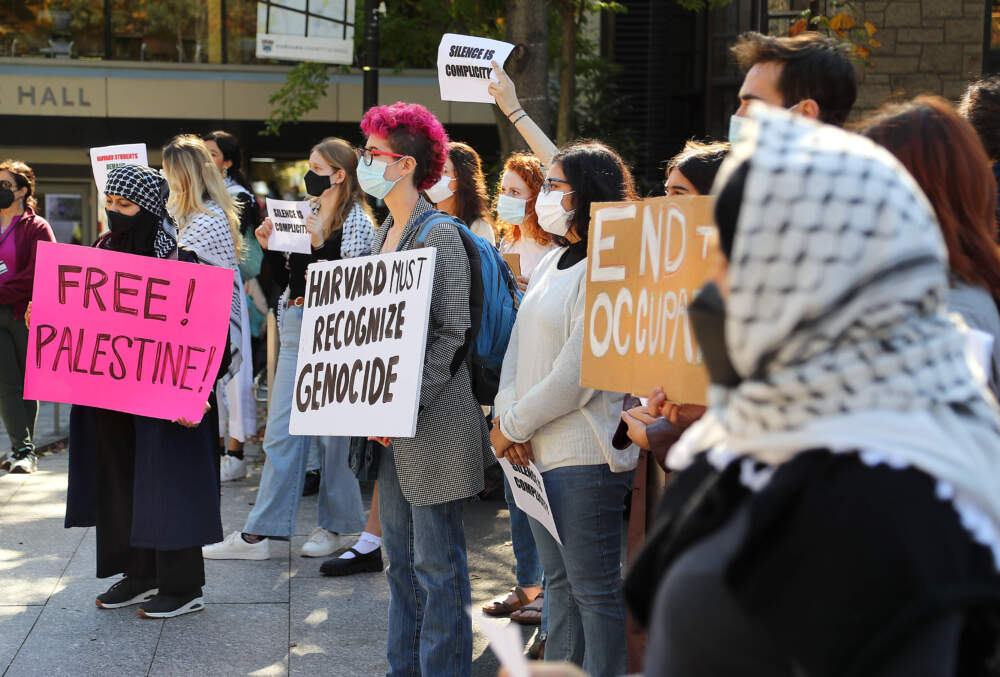
John Hinderaker asks good questions in a brief post at the Power Line blog:

Where do these people come from? How did thy get into MIT, Penn, etc.? . . . I don’t think these educational institutions have any idea how terrible they look to the general public. And I don’t think we can begin to calculate the long-range consequences of the utter moral failure of higher education that we are now witnessing.

But let's keep in mind that before the Hamas issue put the Ivies in the forefront, they'd already drawn public attention in recent months for bringing us a series of con artists, crooks, and incompetents like Elizabeth Holmes, Sam Bankman-Fried, Stockton Rush, and Alissa Heinerscheid. Jeffrey Epstein, who never graduatrd from any four-year institution, nevertheless hitchhiked on Harvard's and MIT's prestige by involving them in his philanthropic hustle. And I've talked about the Ivy admissions problem, for instance here. where I noted that the most recent crop of Ivy sociopaths not only attended elite schools but came from privileged backgrounds as well.

In fact, the Ivy admissions system itself has the resources to answer Mr Hinderaker's questions, although I can't imagine it ever undertaking such an effort. Keep in mind that in the elite-school admissions process, every applicant falls into a "basket", categories including students coming from favored "feeder schools", recruited athletes, legacies, children of major donors and public figures, and favored minorities, all of whom take implicit priority over the "basket" of white and Asian public school kids, who must compete entirely on the basis of grades, test scores, and extracurriculars (Jews not in other baskets are effectively in this basket as well, unless they're subject to an additional Jewish quota).

Although the existence of the admissions baskets is generally acknowledged, the relative sizes of each basket at each university are closely guarded secrets, so this is the first obstacle to getting a serious answer to Mr Hinderaker's questions. But we can at least start with the recognition that every student at every elite school came in with a basket ID that can be interrogated in some way.

The second question is whether we can identify the students who are demonstrating against Israel or otherwise harassing Jews on campus, or at least a significant subset of them. It might be possible simply to attach names to faces in photographs, although this wouldn't differentiate students based on their individual motives or relative commitment. A better indicator might be to identify students who were arrested or otherwise disciplined for conduct at the demonstrations, but there are several obstacles here, too: the universities have so far been generally lenient, and few students have been singled out this way; in other cases, disciplinary measures may be confidential.

But we can at least conduct a thought experiment and ask which members of which baskets might be likeliest to participate in anti-Israel demonstrations or anti-Jew harassment. I suspect that among the least likely would be members of the meritocratic basket, the ones, some of whom are Jews themselves, who competed for admission based entirely on grades, test scores, and extracurriculars. Among other things, those students could well be too busy hitting the books to go to anti-Israel protests, since many of those will still be competing for admission to law and medical school when they graduate from college.

Based on my own experience as an Ivy undergraduate, when I look back on which of my acquaintances occupied the administration building to protest the Viet Nam war and were subsequently arrested, I would say they were predominantly legacies, preppies, and budding minority activists. They'd be less affected by an arrest record, since their family connections would fast-track them into careers irrespective of that record, or in other cases, they could build on the arrest to further an activist career.

The problem for the elite schools hasn't really changed since the days of Viet Nam protests, and it's similar to the emerging problem of the students from privileged backgrounds whom the Ivies are enabling to become crooks, con artists, and famous incompetents: the Ivies started as, and continue to be, institutions of wealth and privilege. The meritocratic basket was forced on them during the post-World War II period, but they continue to maintain baskets of significant but highly confidential size for the privileged, now augmented by new baskets for favored minorities.

Anti-Semitism has always been a component of social elitism, so that's one explanation for why it's found at the Ivies. Another has been the newer tendency to fetishize minorites as victims, what Anti Defamation League CEO Jonathan Greenblatt characterized as the "oppression Olympics":

These college administrators — and you know, it’s the oppression Olympics, . . . where you either play oppressor or oppressed. And in this victimology madness, Jews are somehow put at the bottom.

The real answer to Mr Hinderaker's question is that the Ivies have lulled the world into believing they're meritocratic. This works in their favor, because they serve a significant market, those already wealthy and privileged, who can, as figures like Elizabeth Holmes, Sam Bankman-Fried, Stockton Rush, and Alissa Heinerscheid recently have, use the meritocratic aura of their elite-school degrees to convince their marks that they got into Stanford, MIT, Princeton, and Harvard on their intelligence and hard work, when the real Ivy system ensured this was not in fact the case.

There are very few competitive universities, such as Caltech, that do not use a "basket" admissions system that effectively favors wealthy and privileged applicants -- but even in a system that also favors designated victim groups, as Mr Greenblatt points out, in that oppression Olympics, the Jews wind up at the bottom. Alan Dershowitz sensed this in Chutzpah as well. Without some sort of basic reform, there's always going to be an effective Jewish quota and all the other baggage that goes with it.

Saturday, November 11, 2023

I'm Trying To Figure This One Out

I found this today:

During the third debate, Vivek Ramaswamy called for RNC Chairwoman Ronna McDaniel to resign, citing the party's "culture of losing." Now, Ron DeSantis is throwing more gasoline on the fire, announcing that he is going to defy a threat from McDaniel to disqualify any candidate who attends an upcoming forum in Iowa.

According to an October 28th letter, the RNC has deemed the Family Leader Thanksgiving Forum, hosted by Bob Vander Plaats, to be a "debate." That would supposedly violate the pledge the candidates signed in order to participate in the RNC debates, though there's a good case to be made they are stretching the definition of term to absurd lengths.

But I went to Real Clear Politics for the latest Republican polling average and found this:

Trump 58.5
DeSantis 14.4
Haley 9.0
Ramaswamy 4.7

Then I found this at The Hill:

Fewer than 7 million people watched Wednesday night’s third Republican presidential primary debate on television, the lowest of the debates so far this cycle.

NBC News’s broadcast of the third GOP debate, which aired in prime time from 8-10 p.m., delivered 6.8 million viewers on linear television, including 1.3 million in the advertiser-coveted 25-54 age demographic, according to Nielsen Media Research.

So the RNC is threatening to kick candidates out of future debates if any attends an event the RNC deems a competing debate, except that fewer and fewer people are watching the official RNC debates, and the one Republican who's doing by far the best in the polls is skipping those same RNC sanctioned debates.

And then I found this:

During an appearance on Fox News with host Laura Ingraham, McDaniel defended her record and addressed criticism about her leadership. Ingraham brought up the calls for McDaniel’s resignation and asked her to respond.

McDaniel started by deflecting, putting the attention on President Joe Biden and the Democratic Party.

. . . Ingraham then brought up the controversy over the GOP’s performance in Virginia, which was disappointing, to say the least. McDaniel was again criticized for not providing financial assistance for Republican candidates running in the state. She claimed the state Republican Party told her they did not need help, an argument that was later debunked.

“I know at one point you said that you were not asked for money in Virginia, but a Republican source familiar with the Youngkin team in Virginia told the angle late tonight that that is false. And there, meaning your story keeps changing,” Ingraham said.

As best I can parse this out, Ms McDaniel is claiming that criticism of her role at the RNC is misguided, because the RNC is irrelevant. We'll have to see how this pans out, but right now, the leasding Republican candidate has bypassed the RNC debates because in his estimation, they're irrelevant. Fewer and fewer people are watching the RNC debates because in their estimation, they're irrelevant. And the RNC chair is saying she shoud keep her job, because she's irrelavant.

Thursday, November 9, 2023

Yeah, The Judge Is Losing Control

Dialogue that's beginning to emerge from recent days in Trump's New York trial is giving me the impression that Judge Engoron has already backed himself into reversible territory, and he knows it. Via Forbes from last week:

Engoron’s law clerk has been a source of contention throughout the trial, after Trump made a disparaging post in the trial’s first week sharing a false rumor about the clerk and suggesting she was politically biased against him, prompting the judge to impose a gag order barring parties in the case from speaking about court staff.

The "false rumor" was news that a complaint had been filed with the New York State Bar Association against Judge Engoron's chief clerk, Allison Greenfield, for violating judicial rules preventing officers of the court from making excessive political donations.

[I]n 2022 alone, Greenfield gave $3,335 in political donations to Democrat candidates and causes in New York—more than six times the maximum allowed annually for court officials like herself to give.

Forbes continues,

The back-and-forth over the clerk resumed Friday, with Engoron saying he hoped he was clear when he instructed Trump’s lawyers to stop making improper claims about the clerk and is “worried about this.”

Kise refused to drop the issue, saying, “The entire country, if not the world, is watching this proceeding” and pointing to a Breitbart piece published Thursday, which claimed a Twitter user submitted a complaint to the New York State Bar Association that takes issue with the clerk’s purported “partisan political and Democratic activities.”

The attorney claimed he could file for a mistrial due to the alleged bias.

On Monday, Trump's attorneys continued to telegraph their intent to move for a mistrial on the basis of bias. Via CNN,

Donald Trump’s lawyers said they want to make a motion for a mistrial, getting into an extended debate with Judge Arthur Engoron about how they can raise the conduct of his clerk that’s subject to a gag order.

"We would at least need to reference the subject matter," Trump's attorney Chris Kise said.

Initially, Engoron told Trump’s lawyers they should not file such a motion that referenced his staff, saying he put the gag order in place to protect them.

"I am 1000% convinced that you don't have any right or reason to complain about my confidential communications,” Engoron said.

Other observers have reported that during this exchange, Judge Engoron admonished Kise, "Don't file that motion, Chris", addressing Trump's attorney by his first name in the courtroom, which is highly irregular and suggests the pressures building up on the judge. The CNN account continues,

Trump’s attorneys, who have complained about Engoron’s note-passing with his clerk, claim it’s a sign of the trial’s bias and have urged Engoron to reconsider.

"You can't respectfully reject it before you've seen it," Kise said. Trump attorney Alina Habba told the judge, "Obviously are going to be moving for a mistrial, that is part of the plan."

"We need to have an opportunity to be heard on those things that have not been yet heard,” Habba said.

After conferring with his clerk, Engoron changed course and said that Trump’s attorneys could file a motion, but he asked them to do it in writing.

The trial isn't being televised, so it's hard to determine how frequently Judge Engoron interacts with his clerk, but remarks from observers in the courtroom suggest it's almost constant.

Meanwhile, on Wednesday Laura Loomer alleged that Judge Engoron's wife, Dawn Marie Engoron, had been making anti-Trump tweets from an account called Dawn Marie:

Mrs Engoron has denied that the account is hers:

Newsweek was unable to verify that the account belonged to Dawn, and on Wednesday, she issued a firm denial. Dawn told Newsweek on Wednesday afternoon that the account does not belong to her.

"I do not have a Twitter account. This is not me. I have not posted any anti Trump messages," she said.

Well, after yesterday's post, we at least know that the judge is married to an individual who identifies as female with she/her pronouns, if nothing else. Beyond that,

[I]n a September 27, 2023 article published by Bollywood Safar, over a month before the recent turn of events, Dawn Marie is mentioned as an expert in the field of mental health. Not only that but her current employer’s name was cited as Brain Mind Harmony, where she has been reportedly working as a professional psychotherapist since December 2021.

As per the Bollywood Safar article, her other roles included serving as a psychodynamic psychotherapy supervisor for 3rd and 4th-year residents at the Zucker School of Medicine’s Department of Psychiatry, The Zucker Hillside Hospital, and Northwell Health from July 2021.

I'm sure if Judge Engoron is married to a psychotherapist, his mind and body are indeed in perfect harmony, and he's posted the selfies to prove it.

Wednesday, November 8, 2023

About Judge Engoron. . .

I don't know which way Judge Engoron swings, and it isn't my business, but it seems like he's setting himself up as a bizarre foil for Trump's Chicago Seven strategy. Alan Dershowitz, before the latest revelation of the judge's bathroom selfies, came to the same conclusion in this YouTube post:
At 3:42, he begins,

. . . back at the end of the 1960s and beginning of the 1970s before most of you were born, there was a famous trial in America, it was called the trial of the Chicago Seven. It tas during the 1968 presidential conventions in Chicago that a group of radicals headed by people like Abby Hoffman, left-wing progressive radicals, demonstrated and engaged, sometimes, in some violent conduct, and they were all arrested and charged with conspiracy. I was a consultant on the case, because there were free speech issues, and the trial turned into a farce, because they had picked a judge named Julius Hoffman, who was a very right-wing jurist to preside over the trial, and he hated these radical defendants, and the radical defendants hated him, and Abby Hoffman came up with a tactic, he said basically to his lawyers and everybody else, "Look, we can't win this case in front of Judge Julius Hoffman. Let's see if we can go about getting it reversed on appeal, and the best way to do it is to provoke this judge, he has a short fuse, and provoke him into making error after error."

And that's exactly what [Abby] Hoffman did, he stood up, he made speeches, he wore costumes, he did everything possible to provoke the judge, and the judge fell into the trap, and I was one of the lawyers on the appeal, and we won the appeal, and he held the lawyers in contempt, and we won the appeal on contempt. So we had a total victory, and [Julius] Hoffman really was laughed at by his fellow judges, and he was condemned by jurists and appellate judges. So I call this the Chicago Seven tactic, and I think this is what Donald Trump is using now.

In my view, it doesn't hurt that one of Trump's chief attorneys, Alina Habba, is something of a bombshell, and she stands up to Judge Engoron in court, which he must find especially galling, a highly attractive and assertive woman going against a nebbishy, vain, androgynous, bad-tempered 74 year old. Via Newsweek,

Habba then defended Trump, telling Engoron that the judge is here to "hear what he has to say." Engoron gave an angry response to Habba's interjection, telling the attorney: "I'm not here to hear what he has to say. He's here to answer questions," while demanding she sits down.

In a statement outside the court, Habba said she is not going to "tolerate" being yelled at by a judge and that she was only doing her job as an attorney when defending the former president's responses in court.

Following the revelation of Engoron's bathroom selfies, several commentators have noted that this is not appropriate judicial conduct, and it appears that much like Judge Hoffman, Judge Engoron's reputation will suffer in the wake of this trial. Again, apparently written before the bathroom selfies hit the news, Don Surber posted,

Trump is the issue. Democrats blundered by indicting and suing him so much. Tying him up in court ties the media to keeping him on Page One, where he flourished in 2016. NYT is still holding out hope that Democrats will not suffer a Pyrrhic Victory in court that costs them the presidency.

The official paper of birdcages everywhere reported, “Trump Indictments Haven’t Sunk His Campaign, but a Conviction Might.”

The legacy media can't resist Trump, because Trump brings clicks -- but Trump's ability to deflect the narrative in his favor is uncanny. You can see Dershowitz's grudging respect for Trump growing by the day, and Dershowitz is no amateur at self-promotion himself.

Tuesday, November 7, 2023

Alan Dershowitz Takes The Red Pill

I've followed Alan Dershowitz for much of my life, and I would have to say I've frequently agreed with him, even at times where he's been, in his own characterization, a traditional 1960s-style liberal. More recently, I find myself agreeing with him even more. Over the weekend, he published an op-ed in the UK Daily Mail, ALAN DERSHOWITZ says vile Leftist anti-Israeli hate will turn millions of American Jews from Blue to Red - and he's one.

The Democratic Party now faces a choice.

The Hamas atrocities of October 7th have forever fractured any political alliance between centrist and liberal Jews and woke, anti-Israel progressives.

It's either them or us.

The coalition is at civil war.

This is a point similar to the one I've been making, that the highly successful New Deal alliance of the 1930s and 1940s, which included labor; Catholics, Jews, and other ethnics; northern philanthropic wealth; and southern segregationists, contained contradictions that began to manifest themselves once Kennedy and Johnson co-opted Republicans on the civil rights issue, which had been Republican since Reconstruction. Bringing urban African-Americans into the coalition was inevitably going to cause internal stress, since rightly or wrongly, residents of urban ghettos resented Jews and other ethnics who ran the businesses that served them like pawnbrokers, bail bondsmen, convenience stores, and retailers.

Other contradictions included the original Christian evangelizatioon of African slaves, which stressed the parallel between the Africans and the Jews enslaved in Egypt, while the NAACP was founded with early Jewish support from figures like Henry Moskowitz, Lillian Wald, Rabbi Emil G. Hirsh, and Rabbi Stephen S. Wise. The Spingarn brothers served as officers, and Jacob Schiff, Julius Rosenwald, and Herbert Lehman contributed funds.

A second set of tensions arose with the inclusion of the New Left in the coalition later in the 1960s. While many New Left figures were Jews, there was a second faction, probably just as large, of trust-fund WASPs with consciences troubled about their family wealth that in many ways had dominated the earlier New Deal northern philanthropic alliance with southern segregationists. Many of these figures, like Episcopal Bishop Paul Moore Jr, came from post-Civil War high society that was never completely comfortable with admittng Jews.

My own view is that Nancy Pelosi's main task as a latter-day Democrat leader was to maintain the traditional New Deal alliance with the civil rights and New Left additions despite those contradictions, but she was able to do this alomost singlehandedly via her personal charisma. Once she retired as speaker, nobody else could take over that role, least of all Joe Biden. I think this is at the root of Dershowitz's disaffection:

Nine hard-Left Democratic members of Congress voted against a House resolution that condemned Hamas and expressed support of Israel. Another six voted 'present' for the bill that passed overwhelmingly.

Democratic Rep. Debbie Wasserman Schultz suggested these members who couldn't bring themselves to denounce the slaughter of civilians 'don't have a soul.'

Thank you, Congresswoman. But where, I ask, is the presidential address demanding introspection of the 'soul' of the party?

. . . And just last week, White House Press Secretary Karine Jean-Pierre pointedly declined to say if the President had any plans to speak to the explosion of antisemitism among university students.

It's correct that the universities have been loci of this anti-Semitic outbreak, but I don't think Prof Dershowitz should be surprised. In his own book Chutzpah, he discusses the post-SAT strategy of the Ivies to maintain de facto Jewish quotas by limiting applicants from Northeastern suburbs and favoring white applicants from the South, Midwest, and intermountain West in the name of "diversity", a principle that was established as early as the 1940s. Ivy anti-Semitism is baked into the system, something Dershowitz has recognized all along -- I sensed it, and I'm sorry to say I was influenced by it myself as an Ivy undergraduate in the 1960s.

But he sums up the dilemma quite well in the piece:

I have supported the Democratic Party since I first voted for John F. Kennedy in 1960, for much like my parents and grandparents, and since the days of Frankin Delano Roosevelt, a vast majority of Jewish-American voters could be reliably counted upon to cast their ballots for Democrats and contribute disproportionately to their campaigns.

This is unlikely to continue.

. . . Of course, some Jews will continue to vote blue, but their allegiance will be weakened to the point of disappearing.

. . . The antisemitic and anti-Israeli attitudes uncovered by these game changing events will not be forgotten.

But we should note that this is part of a wider realignment from the New Deal coalition that's been taking place since the 1960s. Trump got the majority of the Catholic vote in 2016; the Southern states went Republican beginning in the 1970s. Prominent Jews formed the neoconservative movement and allied themselves with Reagan in the 1980s. Prof Dershowitz is a smart guy, it's hard to think he's all that surprised now.

Monday, November 6, 2023

Just Sayin'

There's another big takeaway from rhe story I linked in yesterday's post about the schism within the United Methodist Church: Pope Benedict's 2009 apostolic constitution Anglicanorum coetibus was initially directed not just to disaffected Anglicans and Episcopalians, but to members of other, Anglican-derived denominations, such as Methodists or African Methodist Episcopal members. However, this has almost entirely been removed from odrdinariate documentation, with only this vestigial reference on the US ordinariate web site:

Former Anglicans and Methodists who have already become Catholic and wish to join the Ordinariate may submit an application form to the Ordinariate.

However, Wikipedia has kept the earlier intent:

A personal ordinariate for former Anglicans, shortened as personal ordinariate or Anglican ordinariate, is an ordinariate, a canonical structure within the Catholic Church established in order to enable "groups of Anglicans" and Methodists to join the Catholic Church while preserving elements of their liturgical and spiritual patrimony.

The original intent of Anglicanorum coetibus was to facilitiate entry of full Anglican and Methodist parishes into the Roman Catholic Church as existing groups with their clergy. This was reflected in the USCCB's Q&A at the time of its promulgation:

Anglicanorum coetibus was a response to repeated and persistent inquiries from Anglican groups worldwide who were seeking to become Catholic. Ordinariates seek to provide a way for these groups to enter in "corporate reunion"; that is, as a group and not simply as individuals. This will allow them to retain their Anglican liturgical heritage and traditions.

The repeated and persistent inquiries to which the constitution refers came almost entirely in the late 1970s and early 1980s from disaffected Episcopalian parishes who objected to the US Episcopal Church's decision to ordain women and revise its Book of Common Prayer at that time. However, the number of these parishes that actually wished to follow through and affiliate with the Roman Catholic Church was never large at that stage, amounting to fewer than half a dozen.

A second wave of inquries began in the late 1990s, which eventually resulted in the promulgation of Anglicanorum coetibus. but again, the actual number of full Episcopalian or Anglican parishes that were able to follow through, disaffiliate from their original denominations and reaffiliate with the Roman Catholic Church with their clergy, was still in the single digits. On top of that, the history of those clergy who entered via that route was often unhappy and marked by scandal.

So it shouldn't be much of a surprise that the United Methodist Church, an Anglican-derived denomination specifically targeted for Roman Catholic evangelization as Anglicanorum coetibus was originally envisioned, should show effectively zero interest in Pope Benedict's invitation. Via the link in yesterday's post, 6,000 UMC parishes have elected to disaffiliate, but as far as I'm aware, not one of the 6,000 ever expressed even the most tentative preliminary interest in possibly affilating with the Catholic Church.

I would also guess that there's been no interest, either in Rome or in the US ordinariate, in asking why this might be. One path of inquiry might be with the current US ordinary, Bishop Steven Lopes, whose official photo is at the top of this post. Contrast that with the official photo of Bishop Robert Barron on the Diocese of Rochester-Winona website, at right.

There's something complacent about Bp Lopes that we don't see in Bp Bsrron, who basically comes off as an active, happy guy who isn't leaning on ecclesiastical kit to greet the viewer.

There's likely a great deal to be said about the manifest failure of Anglicanorum coetibus to appeal to conservative Protestants concerned about the liberalizing trends of their own denominations, but who are unmoved by the evangelical appeal of the Catholic Church, at least as presented by the Anglican ordinariates. What's gone wrong?

I think it's worthwhile just to compare the generally flat, inward-looking, and uninspiring mesaage that comes out of Houston from Bp Lopes with something like the Catechism in Year podcast from Fr Mike Schmitz, which has 133,000 subscribers on YouTube and is aimed, based on his occasional remarks, at non-Catholics interested in learning more about Catholicism, in addition to current and lapsed Catholics. These are two entirely different approaches.

Sunday, November 5, 2023

The Synod In A Distant Mirror

As a relatively new Catholic convert, I've been reluctant to say anything about the synod recently completed in Rome, except to note what Fr James Martin himself has concludeed about it:

One of these issues was L.G.B.T.Q. Catholics, particularly since this community was explicitly mentioned in the Instrumentum Laboris twice. It was also mentioned in half of the reports submitted by episcopal conferences from around the world. Many hoped that the synod would find ways to speak explicitly about reaching out to this community in new ways. Also there were unreasonably high expectations that the synod would, for example, somehow ratify the blessings of same-sex unions.

But that second option was never going to happen on that or any other issue; the synod is consultative, not deliberative. The synod does not have the power to change any church practice; it can only suggest.

Still, the lack of any mention of the term “L.G.B.T.Q.” in the final synthesis, called “A Synodal Church on Mission,” was, for many people, including myself, a disappointment.

I have the sense that at least so far, the Catholic Church has dodged a bullet. The LGBTQ issue, along with earleir ones like women's ordination, has been destroying main line Protestant denominatins for decades. The United Methodist Church is only the most recent:

More than 6,000 United Methodist congregations — a fifth of the U.S. total — have now received permission to leave the denomination amid a schism over theology and the role of LGBTQ people in the nation’s second-largest Protestant denomination.

. . . Church law forbids the marriage or ordination of “self-avowed, practicing homosexuals,” but many conservatives have chosen to leave amid a growing defiance of those bans in many U.S. churches and conferences.

Many of the departing congregations are joining the Global Methodist Church, a denomination created last year by conservatives breaking from the UMC, while others are going independent or joining different denominations.

Pope Francis in occasional offhand remarks that I haven't been able to locate specifically seems to have come close to the basic issue: Protestant denominations have liberalized on this, that, or the other throughout much of the past century, but it hasn't brought any Protestants back to church. For instance,

The General Convention Office released The Episcopal Church’s annual batch of parochial report data this week, providing a snapshot of the church in 2022 as dioceses and congregations were beginning to rebound from COVID-19 disruptions. In addition to the numbers, these parochial reports also included responses to narrative questions aimed at deepening the church’s understanding of the changes, challenges and opportunities present in parish life.

The topline numbers continue to show a church experiencing gradual long-term membership decline, much like other mainline Protestant denominations. The Episcopal Church’s tally of baptized members dropped just below 1.6 million in 2022, down 21% from 2013.

The church recorded an even sharper drop in average Sunday attendance in the past decade, down 43% to 373,000 in 2022, though that one-year total was up by 19% from the pandemic-driven low of 313,000 in 2021.

Earlier trends among Episcopalians reflect a decline that began in the 1960s and 70s, when that denomination began to embrace secular political issues and move toward ordaining women:

The Episcopal Church Annual, also known as The Red Book, includes a table that tracks Episcopal statistics from 1880 to the present. . . . If one simply finds the high point of Episcopal membership in Red Book tables (1966) and compares that figure (3,647,297) with the total members in 2002 (2,320,221), it would seem that the Episcopal Church lost well over a million members during the last 35 years.

And as of 2022, according to the first link, that number had dropped to 1.6 million, less than half the number in 1966. The Episcopalians had two periods of schism in which conservative parishes left for newly constituted Anglican denominatios, the first in the 1970s and early 1980s, the second in the 2000s. According to Wikipedia, the most important of these, the Anglican Church in North America, had 127,624 members in 2019, which can account for only a small part of the more than 2 million Episcopalian membership decline since 1966.

It appears that the likely outcome of all such schisms will be an overall loss of credibility for organized Christianity that can never be made up by organizing new, quasi-orthodox denominations. This suggests that the schism in the United Methodist Church will never produce an overall membership total among the UMC, the new Global Methodist Church, and other groups harboring other dissident UMC parishes, that ever corresponds to the pre-schism total in the UMC alone. Mostly, it will encourage more people just to drop church attendance entirely.

The increase in overall denominations leads to an increase in bishops and other key spokespeople both locally and nationally, especially when one Anglican or one Methodist leader is pro-LGBTQ and another is anti, which diminishes the prestige of both and the overall ability of religious spokesmen to affect the public dialogue.

Beyond that, when denominations break up into smaller ones, it's economically inefficient, since relatively more of individual parish tithes to their supervising bodies will go to more administrative expenses in more corporate-style offices at more denominations. This contributes to an overall death spiral.

The takeaway, from what I csn see, is that when Christian denominations cave to secular pressure, it kills them fairly quickly, especially over the LGBTQ issue. Rome must certainly be aware of these trends, which has almost certainly, if very quietly, affected the outcome of the recent synod.